Operating Model
The AI-Era Operating Model
A CTO's Field Guide
"Operating model" is consultant-speak for something concrete: the standing answer to four questions — who decides, how teams are shaped, how work is funded, and what gets measured. AI doesn't add a fifth question. It changes the answer to all four, because it moves the binding constraint from headcount to judgment. This guide names the four parts, shows what shifts when AI becomes a serious input, and explains why most transformations stall on the two parts nobody wants to touch.
30-SECOND EXECUTIVE TAKEAWAY
- An operating model is four answers, not a deck. Who holds which decision rights, how teams are shaped, how work is funded, and what gets measured. If a transformation doesn't change at least two of these, nothing real changed.
- AI moves the constraint, not the questions. The bottleneck shifts from headcount to decision throughput. That pushes decisions down, shrinks and reshapes teams, and breaks the old velocity scoreboard — Conway's Law still applies to all of it.
- Stalls come from skipping decision rights and funding. Most "transformations" redraw the chart and rewrite the capability map but leave the approvers and the annual budget cycle untouched, so behavior reverts. Goodhart's Law finishes the job when you bolt AI onto old metrics.
WHAT IT'S ACTUALLY MADE OF
The four parts of any operating model
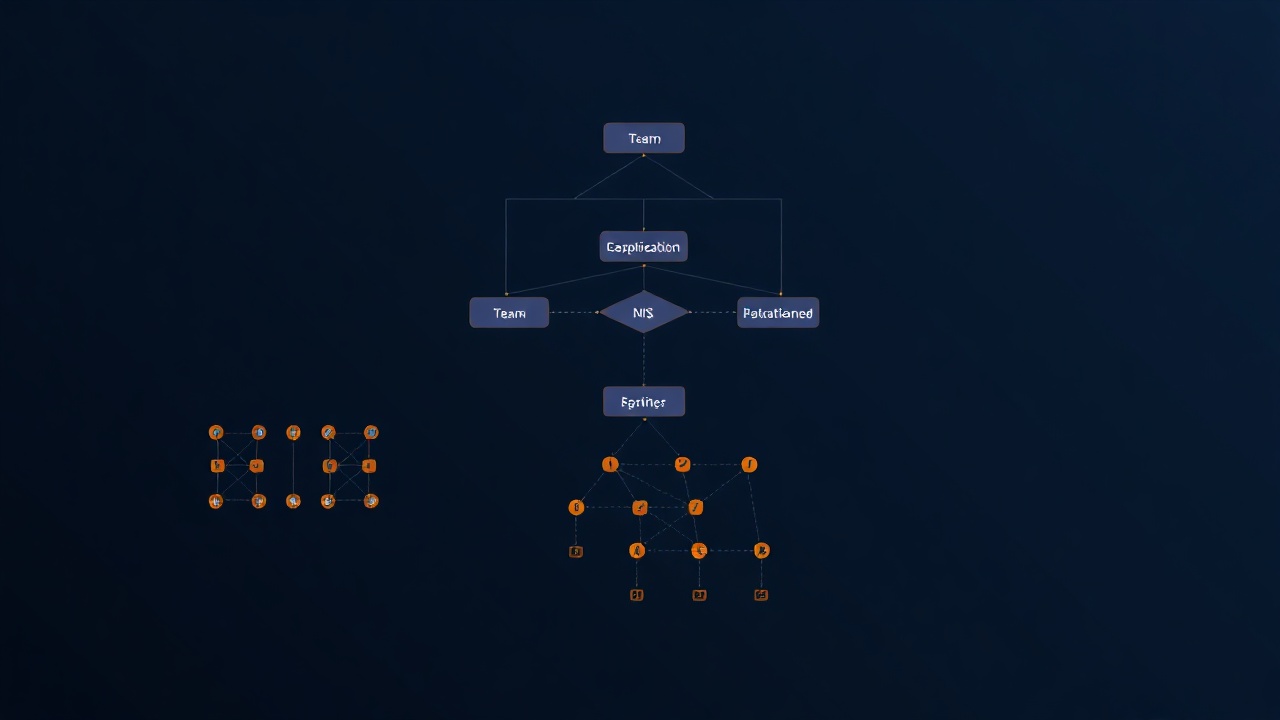
Capability maps, value streams, and RACIs are detail hung off four load-bearing decisions. Get these four right and the rest follows; get them wrong and no amount of process documentation rescues it. The two on the left — decision rights and funding — are where transformations actually live or die.
Decision Rights
Who is allowed to decide what, and who only gets consulted. The single most load-bearing part of any operating model and the one reorgs most often skip. AI pushes decisions downward: the person closest to the work can now execute it directly.
Go deeper →Team Topology
How teams are shaped, sized, and bounded — and what each one owns end to end. Conway’s Law is non-negotiable here: your system architecture will mirror your team boundaries whether you plan it or not.
Go deeper →Funding & Cadence
How work gets paid for and on what rhythm. The shift from annual project funding to persistent product funding is the change most transformations announce and never actually make — and the one that silently reverts the rest.
Go deeper →Measurement
The metrics that drive behavior — not the ones on the dashboard, the ones people actually optimize. Bolt AI onto velocity or utilization and Goodhart’s Law guarantees the team games the old number instead of doing the new work.
Go deeper →WHAT CHANGES
What AI shifts in each dimension
AI doesn't rewrite the operating model from scratch — it re-derives the same four answers from a new binding constraint. When the constraint stops being headcount and becomes decision throughput, each dimension moves in a predictable direction.
| Dimension | Pre-AI default | AI-era shift |
|---|---|---|
| Binding constraint | Headcount — more output meant more engineers | Judgment & decision throughput — a small team produces far more |
| Decision rights | Escalate up; senior approval gates execution | Push down; the person closest to the work executes it directly |
| Team shape | Larger teams to cover the surface area of the work | Smaller, higher-leverage teams; topology matters more than size |
| Funding model | Annual project funding, utilization-based | Persistent product funding tied to outcomes, not staffing |
| Scoreboard | Velocity, utilization, ticket throughput | Outcome and flow metrics; old velocity stops measuring the thing |
The direction is consistent across all five rows: down, smaller, persistent, outcome-based. A transformation that claims to absorb AI but leaves decisions escalating, teams the same size, budgets on the annual cycle, and velocity on the scoreboard hasn't absorbed anything — it has added AI tools to the old operating model and called it a new one.
THE FAILURE MODE
Why operating model transformations stall
The mechanism is almost always the same, and it has nothing to do with effort. Transformations stall because they change the parts that are easy to redraw and avoid the two that actually govern behavior.
| What teams change | What they avoid | What happens |
|---|---|---|
| Org chart & capability map | Decision rights | People keep escalating to the same approvers; the new boxes are cosmetic |
| New roles & titles | Funding cadence | Budgets still flow annually by project; nothing can be staffed the new way |
| New AI tooling | Measurement | Velocity and utilization stay on the scoreboard; Goodhart's Law reverts the change |
| A separate "AI" model | Integration | A shadow org forms that the rest of the company routes around |
The fix isn't a better deck. It's spending the political capital to move decision rights and funding first — the two changes that require authority the transformation office doesn't have. That's why operating-model work is a CEO-mandated, CTO-owned job, not a PMO deliverable. See CTO management for the delegation and board-funding mechanics, and team design for the topology side.
EXPLORE THE OPERATING-MODEL CLUSTER
Where each part of the model is worked out
Team Design & Conway’s Law
How team boundaries become system architecture, and how to shape topology deliberately instead of inheriting it. Org chart, center of excellence, and technical-debt mechanics.
The AI-Native Org Chart
What the reporting and ownership structure looks like once AI is a first-class input, not a side project. Where the CAIO sits and what they actually own.
CTO Management & Decision Rights
Delegation, the CEO relationship, board funding conversations, and the first 90 days — the levers a technology leader actually uses to move decision rights and funding.
Engineering Metrics That Survive AI
DORA, the alternatives, and AI-team metrics. Which numbers still measure the thing once agentic tooling changes what "productive" means.
Center of Excellence vs Embedded
The classic transition vehicle for absorbing a new capability — when a CoE accelerates adoption and when it becomes a quarantine the org routes around.
Fractional CTO
When the operating-model change is bigger than the current leadership team can run alone — what a fractional technology executive actually does and what it costs.
Operating Model: Frequently Asked Questions
What is an operating model, in plain terms?
How does AI change the operating model?
What’s the difference between an operating model and an org chart?
Why do operating model transformations stall?
Who owns the operating model?
Do we need a separate AI operating model?

Operating-model decisions, monthly
How working CTOs and CAIOs are actually re-wiring decision rights, team topology, and funding for the AI era. Mechanism over buzzwords, written for executives.