E01
AI & Machine Learning Published
Voice AI & Real-Time AI
I tested three voice cloning engines with real money and real audio. Here's what I found about quality, cost, and where Voice AI is headed.
Each lab series picks a technology category, tests real products with real money, and publishes everything. Results, costs, code, and honest opinions. No vendor sponsorship.

Every experiment has a podcast episode
Every lab article has a matching podcast episode where I talk through the results, share stuff that didn't make the write-up, and answer listener questions.
Listen to the CTAIO Lab Podcast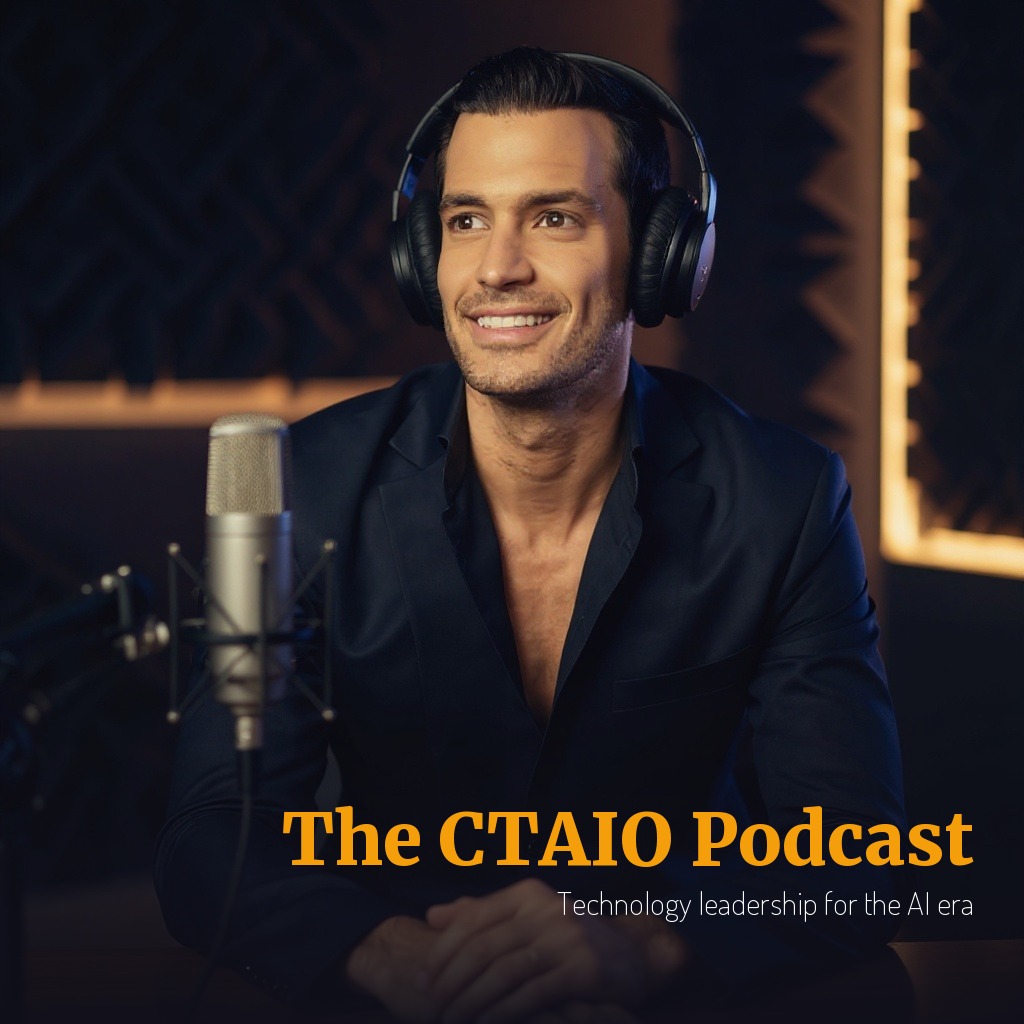
Voice cloning, video avatars, lip sync, and the full production pipeline — tested with real money and real audio.
I tested three voice cloning engines with real money and real audio. Here's what I found about quality, cost, and where Voice AI is headed.
Voice clone done. Now I turn it into a talking-head video. I tested HeyGen, Sync Labs, and D-ID — lip-sync accuracy, avatar rendering pipelines, latency, and the real production costs.
Hands-on analysis of the platforms, tools, and infrastructure decisions that shape modern technology organizations.
How the foundation model race is reshaping enterprise AI strategy — from GPT to Claude to Gemini and open-source challengers.
AI-powered coding is rewriting how engineering teams ship software. Which tools are production-ready and which are hype?
Autonomous AI agents are moving from demos to enterprise deployments. The platforms, patterns, and pitfalls leaders need to know.
Observability spend is exploding. We break down the Datadog vs. open-source debate and what CTOs are actually choosing.
Multi-cloud, repatriation, or all-in on one provider? The real economics and trade-offs enterprise leaders face today.
Kubernetes won the orchestration war. Now what? Platform teams, developer experience, and the next wave of container tooling.
Identity is the new perimeter. How zero-trust IAM is becoming the foundation of enterprise security architecture.
From training to serving — the infrastructure stack that gets ML models from notebooks into production reliably.
AI-augmented pipelines are changing how teams build, test, and deploy. The state of CI/CD in the age of agents.
The $100M migration nobody wants to talk about. Why ERP modernization fails and the patterns that actually work.
Customer data platforms are converging with AI personalization. The new martech stack for the post-cookie era.
How to show up when an AI agent is the one doing the searching. LLM visibility tools tested, GEO/AEO/LLM-SEO frameworks compared on identical content, and a 30-day llms.txt citation experiment.
Ten LLM visibility tools — Profound, Peec AI, AthenaHQ, Otterly, Scrunch, Evertune and four more — scored on coverage, accuracy, pricing, and freshness against three real brand portfolios.
One identical article rewritten under GEO, AEO, and LLM-SEO playbooks. Citation rates measured across ChatGPT, Perplexity, and Gemini.
A 30-day controlled experiment: does shipping llms.txt, schema markup, and FAQ structure actually move AI citation rates? Per-engine deltas across three sites.
Standalone investment-pattern reads and market analysis — outside the weekly schedule, published when the signal is strong enough.
Three VC syndicates bet $313M on the premise that AI has made ERP migration cheap enough to reopen the mid-market switching decision. The mechanism is real — and it cuts both ways.
These experiments feed directly into the advisory work I do with enterprise teams. If your organization needs help evaluating or deploying these technologies, take a look at the fractional CTO advisory services.
A series of hands-on experiments in AI and enterprise technology. Each lab takes a single product or technique, tests it on real work with real money, and publishes the methodology and results. The aim is to produce buyer-grade information that vendor pages and Twitter threads do not.
A new lab series typically takes four to eight weeks to research, test, and write up. New labs and methodology updates publish on a roughly weekly cadence. Subscribers to the CTAIO newsletter get a heads-up when each one drops.
Each lab follows the same scoring rubric, documented in our SaaS testing framework. Tools are evaluated against a fixed test scenario, scored on accuracy, false-positive rate, latency, ergonomics, and price. Vendor relationships are disclosed at the top of each lab. We do not accept payment for placement and we do not accept review-unit hardware unless it is returned at the end of the test.
Yes. The most useful suggestions are specific: a vendor category that needs an honest comparison, a claim that needs verification, or a workflow that nobody has tested end-to-end. Reply to any CTAIO newsletter or use the contact form. We pick lab topics from this queue.
No. CTAIO Labs is funded by newsletter subscriptions and consulting income. Vendors do not pay for inclusion, and they do not get advance review of write-ups. When a vendor does grant access (a product trial, a beta) that is disclosed at the top of the lab.
Because that is the point of an independent lab. Vendor pages describe what the product can do at its best. The labs describe what it does on average, on a real codebase, with realistic constraints. The gap between the two is what readers come for.
New experiments go out every week. Subscribe and you won't miss one.
Subscribe free